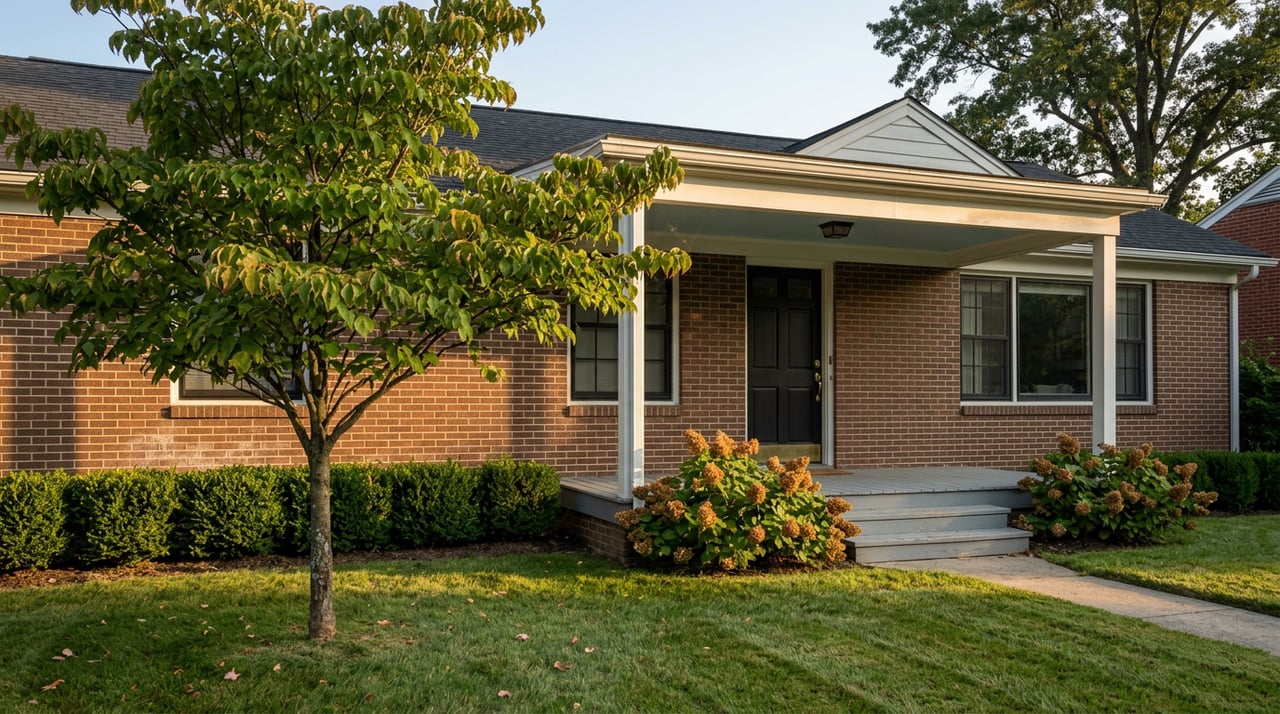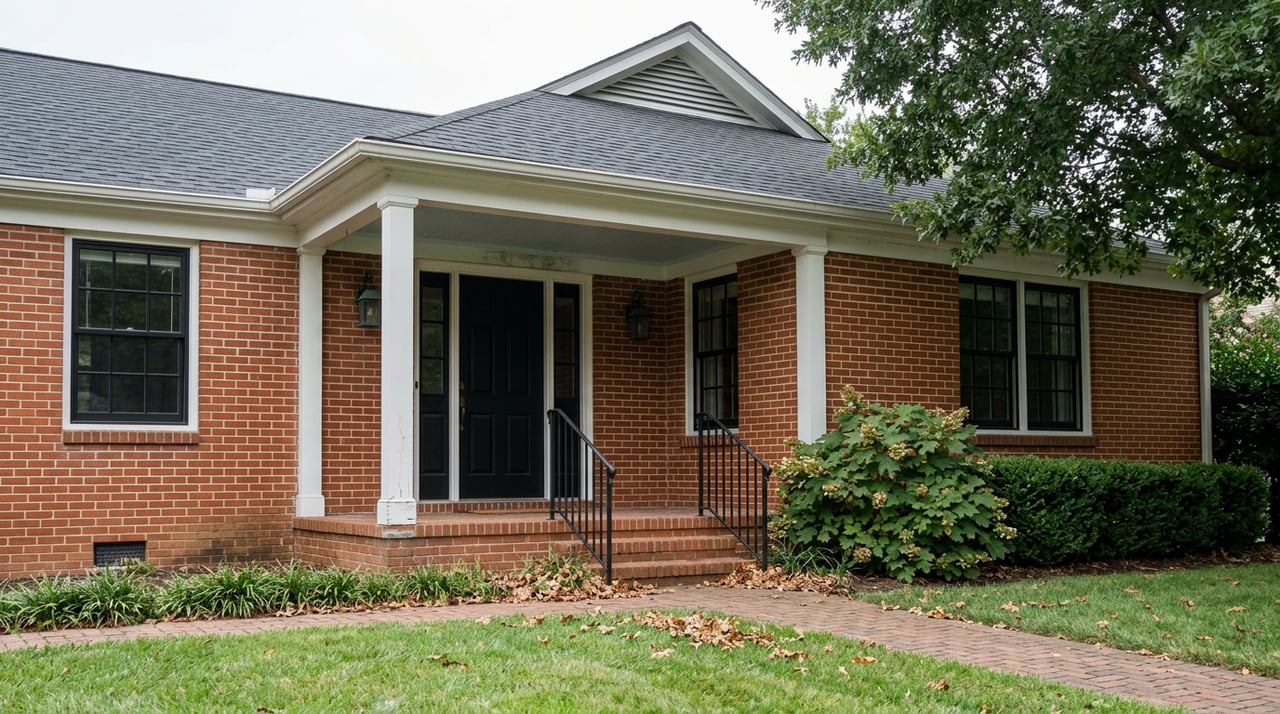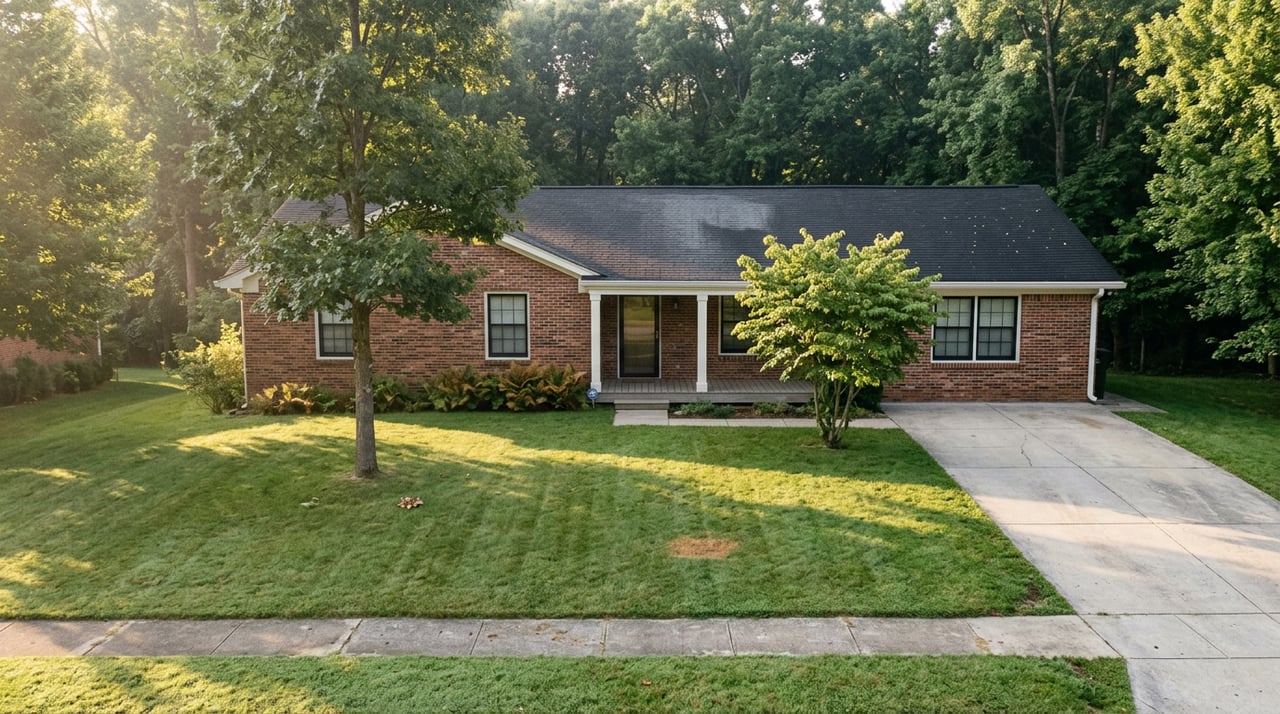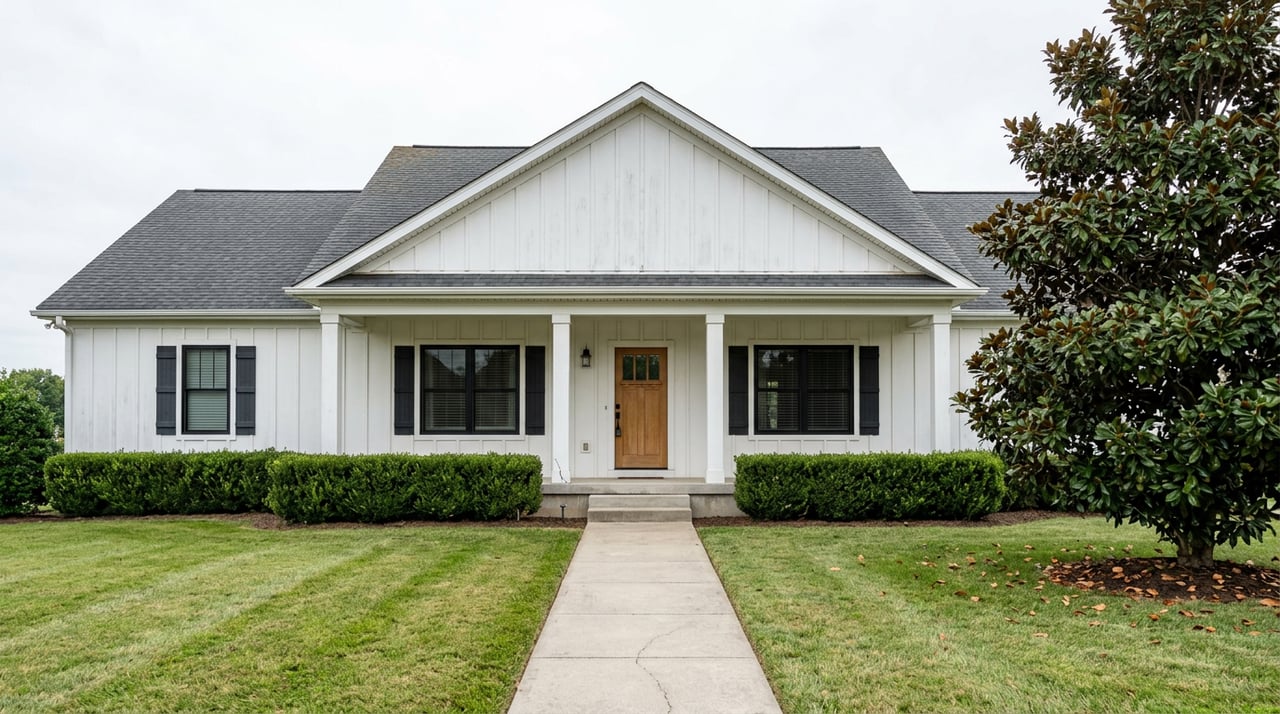
A new-construction listing on the edge of Maryville describes itself in plain, almost proud terms: a rancher on a full acre, mature trees, no HOA, and "county taxes only." That last phrase is doing more work than it looks like it's doing. It is not a lifestyle detail. It is a tax bracket, dressed up as a selling point.
A few miles away, inside the city limits, another new build just finished near downtown, close enough to walk to Pistol Creek. Same price range. Same finish level. Same buyer profile, probably. But one of these two houses will cost its owner roughly double the other in property tax every single year, for as long as they own it, and nothing on either listing page says so.
The Line Nobody Puts in the Listing Photo
Tennessee assesses residential property at 25 percent of its appraised value, and that assessed figure gets multiplied by whatever tax rate applies. In most of Blount County there is only one rate to apply: the county's. But the City of Maryville explains its own billing plainly on its property tax page: if a parcel sits inside city limits, the owner owes both the city rate and the county rate on the same assessed value. Step outside that boundary, even by a few hundred feet, and only the county rate applies.
That boundary rarely follows anything a buyer would notice while touring a house. It doesn't follow zip codes. Both 37801 and 37803 straddle it. It doesn't follow subdivision names, since a single development can sit entirely on one side while the next one over sits on the other. It follows a line drawn by decades of annexation decisions, most of them made in city council chambers long before the houses being compared today were framed.
Why the Rate Jumped, Then Dropped
The gap between the two rates has moved twice in the past year and a half, for two completely different reasons, and both are worth knowing if you're weighing a purchase right now.
The city side moved first. For the fiscal year that began in July 2025, Maryville City Council raised its rate 13 cents, from $1.50 to $1.63 per $100 of assessed value, specifically to help cover a $55 million bond for the Maryville High School expansion. Council member Sarah Herron cast the lone dissenting vote, citing families already squeezed by rising costs. Mayor Andy White defended the math as restraint rather than excess:
"This is a 24 cent on the dollar tax rate increase that we're able to do for 13 cents and still get what we need."
The city covered the other 11 cents by freeing up debt payments on two older projects, Coulter Grove and the ESSI lighting project, that were close to being paid off.
For the fiscal year that began this July, city officials told The Daily Times they expected no further increase. City Manager Greg McClain said the plan was to adopt the state's certified rate of $1.36 per $100, a genuine drop from the prior year's $1.63.
The county side moved on its own separate clock. Tennessee requires a "certified tax rate" recalculation after every countywide reappraisal, so a jump in home values doesn't automatically hand local government a windfall. Blount County's three-year reappraisal cycle landed this spring, and with countywide property values up an estimated 18 to 20 percent, the certified rate came in far below the old one. All 21 county commissioners co-sponsored a resolution urging the budget committee to adopt the certified rate or lower. The final budget, approved 19-0 on June 18, 2026, set the rate at $1.29, a full 30 cents below the $1.59 that had held for the previous three fiscal years. Then-County Mayor Ed Mitchell, who retired at the end of his term that August, summed up the philosophy behind it:
"No new debt, no new taxes and live within our means. That's worked well for Blount County government and I hope it is how it continues to do things."
Two rates, two separate decisions, arriving at roughly the same time, for opposite reasons. That coincidence is exactly why the city-versus-county math looks so different right now than it did a year ago, and why it's worth checking rather than assuming.
The Math on an Actual House
Put both current rates side by side and the picture is stark.
| Rate per $100 assessed | On a $400,000 home (assessed at $100,000) | |
|---|---|---|
| Blount County only | $1.29 | $1,290 per year |
| Maryville city limits (city + county) | $2.65 | $2,650 per year |
That's a $1,360 annual difference, or roughly $113 a month, between two houses that could otherwise be identical in every category a portal search filters by: price, square footage, bed and bath count, lot size. Neither listing discloses this number up front. The buyer has to go looking for it, or trust that their agent already knows which side of the line they're standing on.
It's also worth remembering this isn't a one-time closing cost. It compounds every year of ownership, the same way an HOA fee does, except there's no HOA to point to and no line item on the listing sheet that flags it.
Three Things to Check Before You Compare Two Listings
- Ask specifically whether the parcel is inside Maryville city limits, not just what zip code or mailing address it carries. The Blount County Property Assessor's office can confirm jurisdiction on a parcel-by-parcel basis, and it's a five-minute question worth asking before you fall in love with a floor plan.
- Ask whether the subdivision has been annexed recently, or sits inside an area the city has already targeted for growth. Maryville has a documented pattern of annexing corridors ahead of commercial development specifically to start the clock on future sales-tax revenue, a practice the city used along several major roads back in 2017. A parcel that's unincorporated today isn't necessarily unincorporated for the life of your mortgage.
- Remember the county's rate just reset on a three-year reappraisal cycle. The math in this post reflects rates adopted for the fiscal year that began July 1, 2026. The next scheduled reappraisal, and the next certified-rate recalculation that follows it, is roughly three years out.
Questions Buyers Ask Once They See the Bill
Does this affect which school district my kids fall into? It can. Maryville City Schools is funded in part through the city's own property tax rate, which is exactly why the high school expansion bond showed up as a city rate increase rather than a county one. Homes outside city limits are typically zoned to Blount County Schools, funded through the county's rate instead. The two systems draw their boundaries independently of each other, so it's worth confirming zoning directly rather than assuming it follows the tax line.
Can I appeal my assessment if I think it's too high? Yes. The Blount County Property Assessor's office accepts formal appeals ahead of an annual deadline each spring, and the process is separate from whatever rate the city or county eventually sets.
Is there any relief for older homeowners or veterans? Both the city and county participate in the state's Property Tax Relief and Property Tax Freeze programs, aimed at homeowners 65 and older or 100 percent disabled veterans, subject to an income cap the state sets annually, currently near $38,470. The City of Maryville's finance office and the county trustee's office both handle applications.
The line between "county taxes only" and city-plus-county isn't marked on any map a buyer sees during a showing. It shows up once a year, in a bill, long after the offer is accepted. Anyone comparing two houses at the same price per square foot in Maryville is really comparing two different long-term carrying costs, and only one of those numbers is printed anywhere public.
If you're weighing that comparison right now, on a specific address rather than a hypothetical one, The Fowler Group can check the parcel's actual jurisdiction and pull the current combined rate before you write an offer, not after you've already budgeted around the wrong number. Reach out for a free home valuation and we'll walk the real math with you, line by line.